Public framework sheet
GoCEAPER Framework Sheet
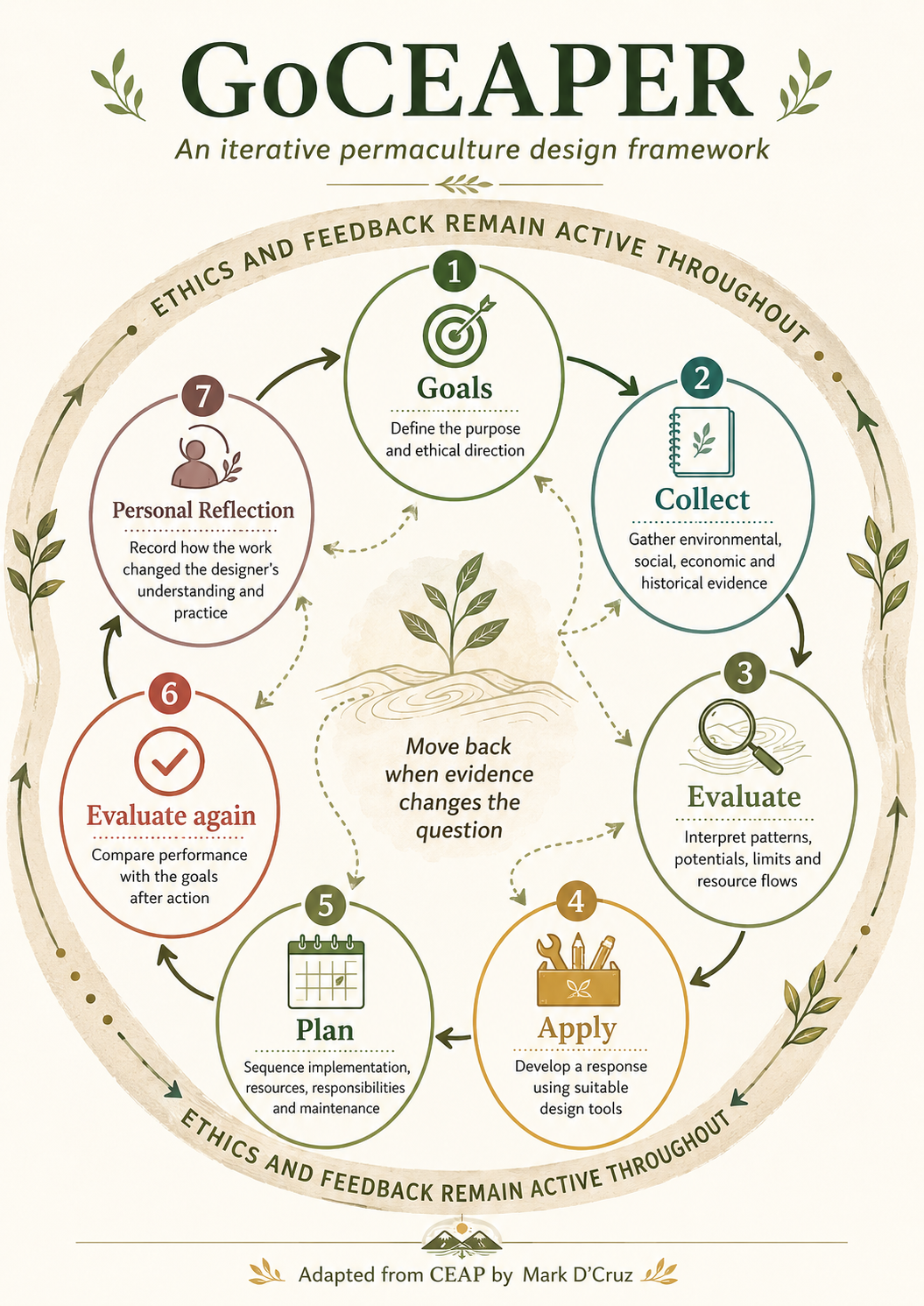
GoCEAPER adapts CEAP by making Goals explicit, adding post-implementation Evaluation and ending with Personal Reflection.
What the framework is for
Useful where a project needs a clear plan but also explicit learning after implementation. Mark applied it to the Vila Pinheiro energy self-sufficiency design.
Stages and movement
- GoalsDefine the purpose and ethical direction.
- CollectGather environmental, social, economic and historical evidence.
- EvaluateInterpret patterns, potentials, limits and resource flows.
- ApplyDevelop a response using suitable design tools.
- PlanSequence implementation, resources, responsibilities and maintenance.
- Evaluate againCompare performance with the goals after action.
- Personal ReflectionRecord how the work changed the designer’s understanding and practice.
Ethics and feedback remain active throughout. Move back when evidence changes the question.
A concise application
An energy project can begin with demand and resilience goals, collect actual consumption and site evidence, evaluate reduction and generation options, apply design tools, plan staged action, assess performance and reflect on changed assumptions.
How to use it responsibly
- Begin with a defined purpose and the people and living systems affected.
- Use only the tools that improve evidence or judgement.
- Record assumptions, decisions and responsibility for continuing care.
- Return to an earlier stage when observation changes the question.
- Do not transfer a worked example to another place without a new survey.
Authorship and lineage
CEAP is inherited. In Design 4, Mark D’Cruz documented the GoCEAPER adaptation by adding Goals, a second Evaluation and Personal Reflection. The Academy does not claim authorship of CEAP.
Sources and provenance
- Mark D’Cruz, relevant Diploma design and annexure within the Applied Permaculture Diploma journey.