Public framework sheet
GRAZER Framework Sheet
GRAZER organises animal-system design around goals, resources, analysis, zones, ecosystem monitoring and regenerative refinement.
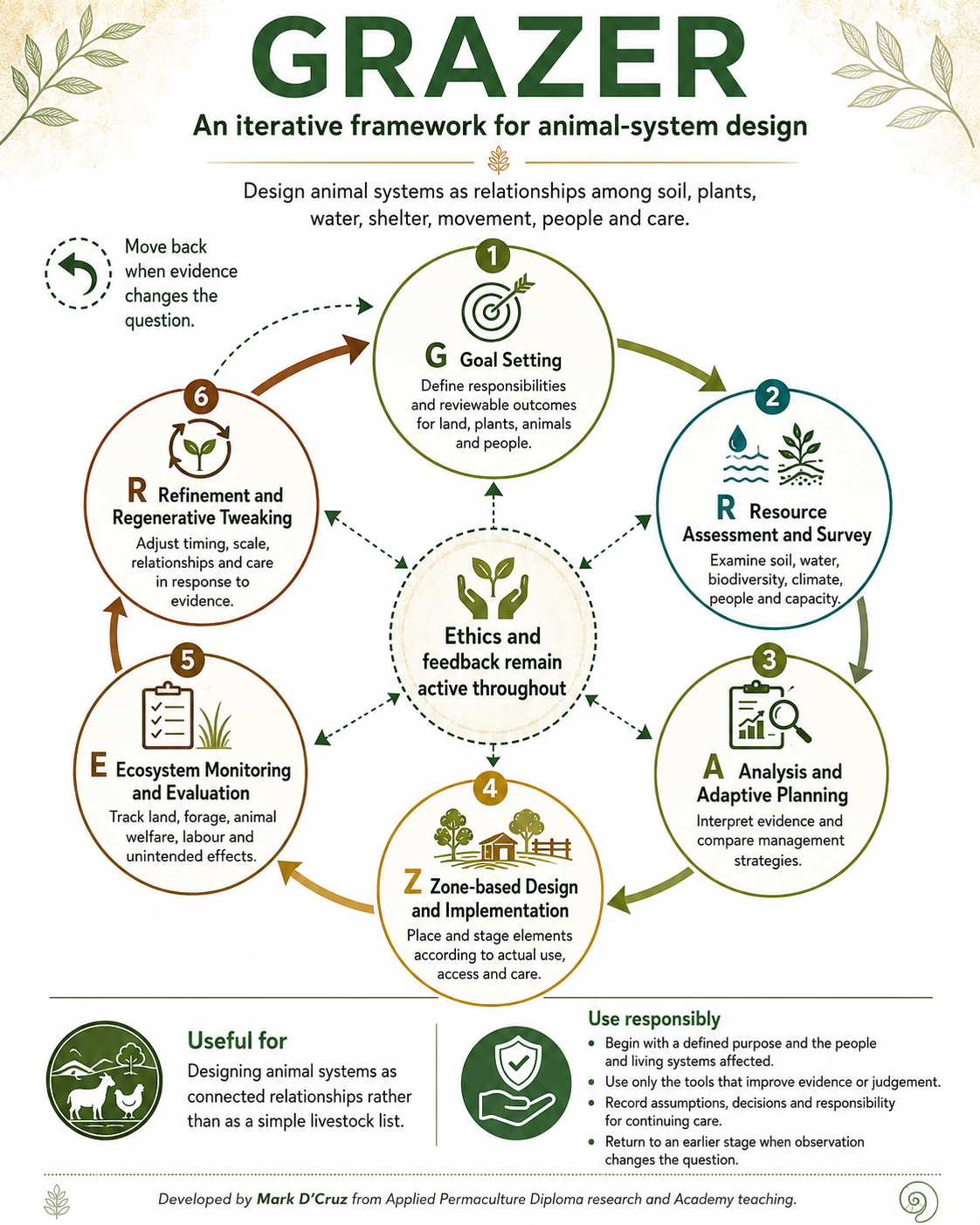
What the framework is for
Useful for an animal system that must be designed as relationships among soil, plants, water, shelter, movement, people and care rather than as a livestock list.
Stages and movement
- Goal SettingDefine responsibilities and reviewable outcomes for land, plants, animals and people.
- Resource Assessment and SurveyExamine soil, water, biodiversity, climate, people and capacity.
- Analysis and Adaptive PlanningInterpret evidence and compare management strategies.
- Zone-based Design and ImplementationPlace and stage elements according to actual use, access and care.
- Ecosystem Monitoring and EvaluationTrack land, forage, animal welfare, labour and unintended effects.
- Refinement and Regenerative TweakingAdjust timing, scale, relationships and care in response to evidence.
Ethics and feedback remain active throughout. Move back when evidence changes the question.
A concise application
At Vila Pinheiro the framework supports planning for rotational paddocks and connected woodland and food systems. The work is still being tested and should not be presented as a completed model.
How to use it responsibly
- Begin with a defined purpose and the people and living systems affected.
- Use only the tools that improve evidence or judgement.
- Record assumptions, decisions and responsibility for continuing care.
- Return to an earlier stage when observation changes the question.
- Do not transfer a worked example to another place without a new survey.
Authorship and lineage
GRAZER is an Academy framework developed by Mark D’Cruz for Design 9. It is a project-specific synthesis, not a historical permaculture framework and not a third-party endorsement.
Sources and provenance
- Mark D’Cruz, relevant Diploma design and annexure within the Applied Permaculture Diploma journey.