Public framework sheet
PERMA-SADIMET Framework Sheet
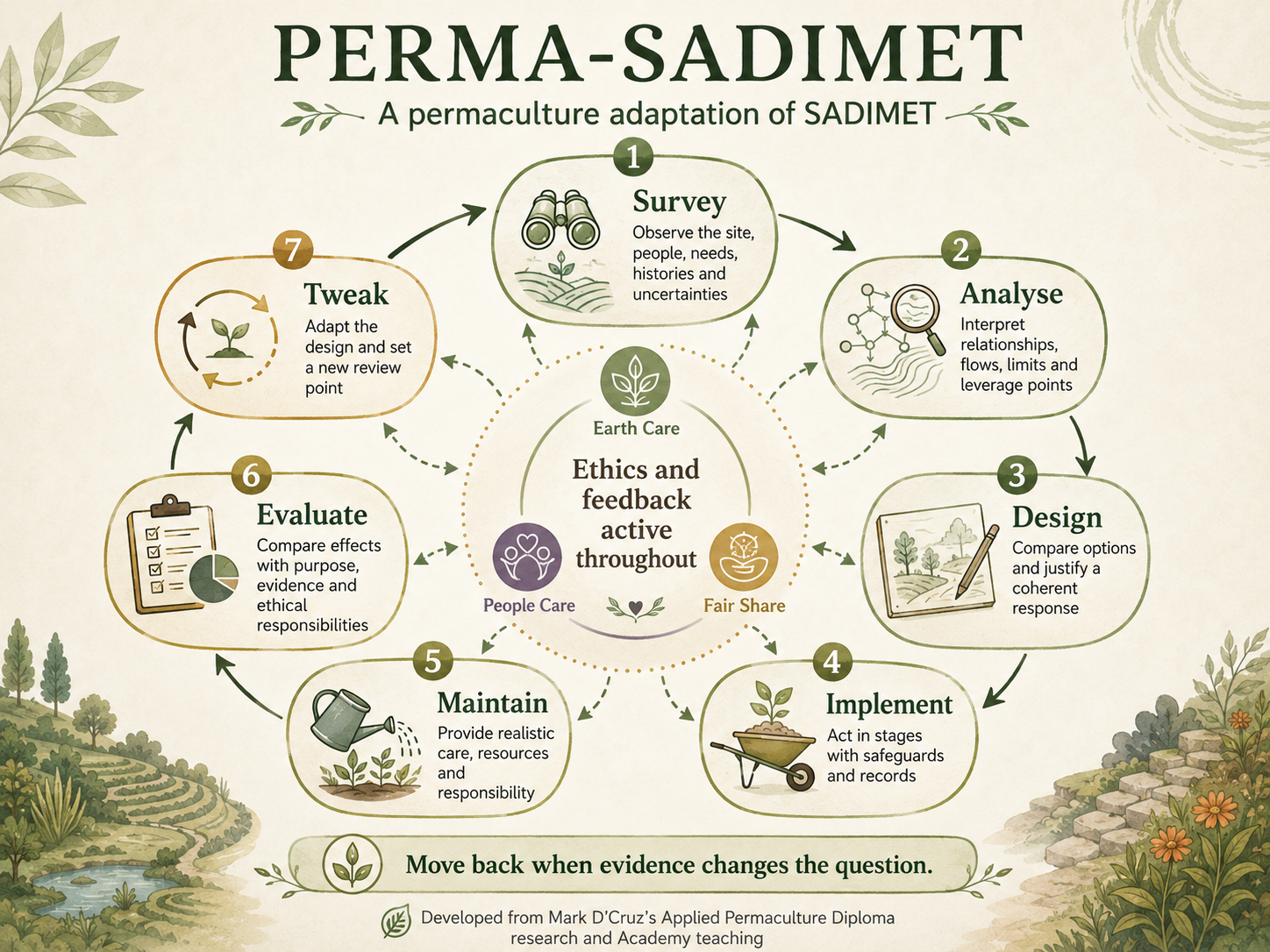
PERMA-SADIMET keeps the inherited SADIMET stages and makes permaculture ethics and relevant principles active tests at every stage.
What the framework is for
Useful when technical work could otherwise push ethics into the background. Mark developed and applied it through the Vila Pinheiro water design.
Stages and movement
- SurveyObserve the site, people, needs, histories and uncertainties.
- AnalyseInterpret relationships, flows, limits and leverage points.
- DesignCompare options and justify a coherent response.
- ImplementAct in stages with safeguards and records.
- MaintainProvide realistic care, resources and responsibility.
- EvaluateCompare effects with purpose, evidence and ethical responsibilities.
- TweakAdapt the design and set a new review point.
Ethics and feedback remain active throughout. Move back when evidence changes the question.
A concise application
A water design can test each stage against Earth Care, People Care and Fair Share: whose water need is served, what downstream effects may follow, what maintenance burden is created and what evidence would justify a change.
How to use it responsibly
- Begin with a defined purpose and the people and living systems affected.
- Use only the tools that improve evidence or judgement.
- Record assumptions, decisions and responsibility for continuing care.
- Return to an earlier stage when observation changes the question.
- Do not transfer a worked example to another place without a new survey.
Authorship and lineage
SADIMET is inherited. PERMA-SADIMET is Mark D’Cruz’s documented adaptation, independently recognised in the Design 5 assessment as an original adaptation. It does not alter the SADIMET acronym.
Sources and provenance
- Mark D’Cruz, relevant Diploma design and annexure within the Applied Permaculture Diploma journey.