Layered analysis
Functional, Structural and Elemental Analysis
Examine what a system must do, how it is organised and which elements carry the work, keeping purpose ahead of preferred features.
What the tool is
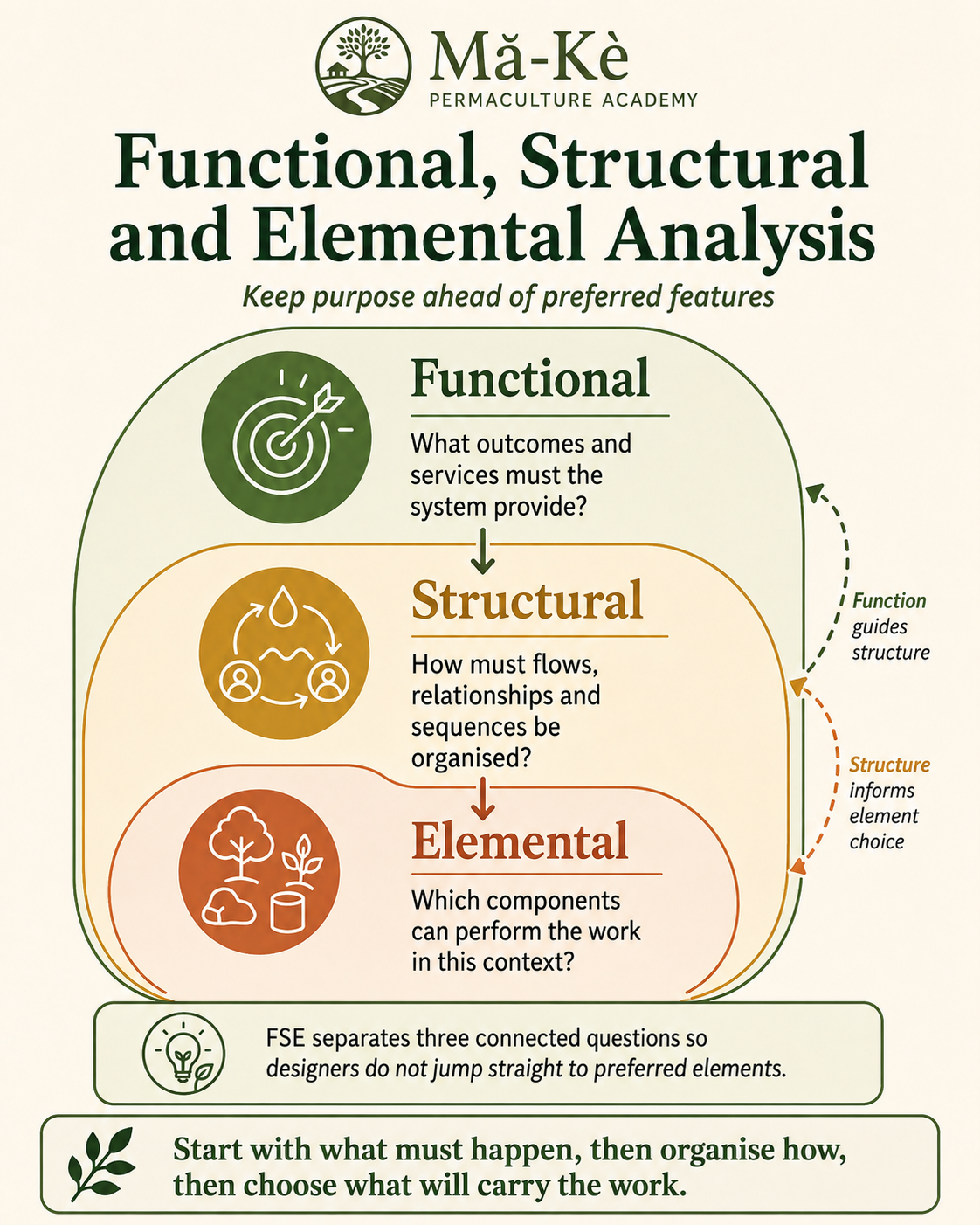
In Mark’s Design 05, Functional, Structural and Elemental analysis, abbreviated FSE, separates three connected questions. Functional analysis asks what must happen. Structural analysis asks how relationships, sequences and physical arrangements support those functions. Elemental analysis asks which components can carry them.
The Diploma research register uses the variant “Functional, Structural, Elements”. The primary Design 05 PDF clearly uses “Functional, Structural, Elemental”, so that source governs this page.
The method at a glance
Functional
What outcomes and services must the system provide?
Structural
How must flows, relationships and sequences be organised?
Elemental
Which components can perform the work in this context?
This accessible HTML diagram is a teaching aid. Its labels and explanatory text, rather than colour or position alone, carry the meaning.
When to use it
Use FSE when a design discussion jumps too quickly to named features, products or technologies. It is useful for water, energy, access and other systems where several elements must work together over time.
How to use it
- State the purpose, limits and conditions.
- Write required functions without naming preferred elements.
- Map the structural relationships, flows, redundancies and maintenance sequence.
- Generate possible elements for each role.
- Test whether each element performs more than one useful function and whether each critical function has appropriate support.
- Revisit the layers after costing, specialist advice or field testing.
From Mark’s Diploma practice
Design 05 applies FSE to water self-sufficiency. Functions include safely handling storm water and supplying water. Structural relationships include catchment, conveyance, storage, infiltration and irrigation. Elements include storm drains, swales, a pond, the existing well, rainwater storage and irrigation components. The analysis does not prove that every proposed element was implemented or performed as expected.
Limitations and cautions
- The three headings can overlap, so definitions and reasoning should remain visible.
- FSE does not replace hydrological, structural, legal or safety expertise.
- A tidy system diagram can hide cost, maintenance and failure modes.
- Element redundancy is not automatically beneficial if it creates unmanageable complexity.
Authorship and provenance
The controlled evidence supports Mark’s documented use of FSE in Design 05. It does not establish that he invented the general analytical categories or that FSE is a standardised method across permaculture.
Diploma source locators
- Design 05, design summary, PDF page 3: PMI and FSE named as design tools.
- Design 05, Functional, Structural and Elemental analysis, PDF pages 17 to 19: application to the water system.
References
- Mark D’Cruz, Water Self-sufficiency with Attachments, Design 05, controlled Diploma source.