Mă-Kè Bonsai Way tenet
Health of the Tree
The living health of the tree takes precedence over a styling ambition.
What this tenet means
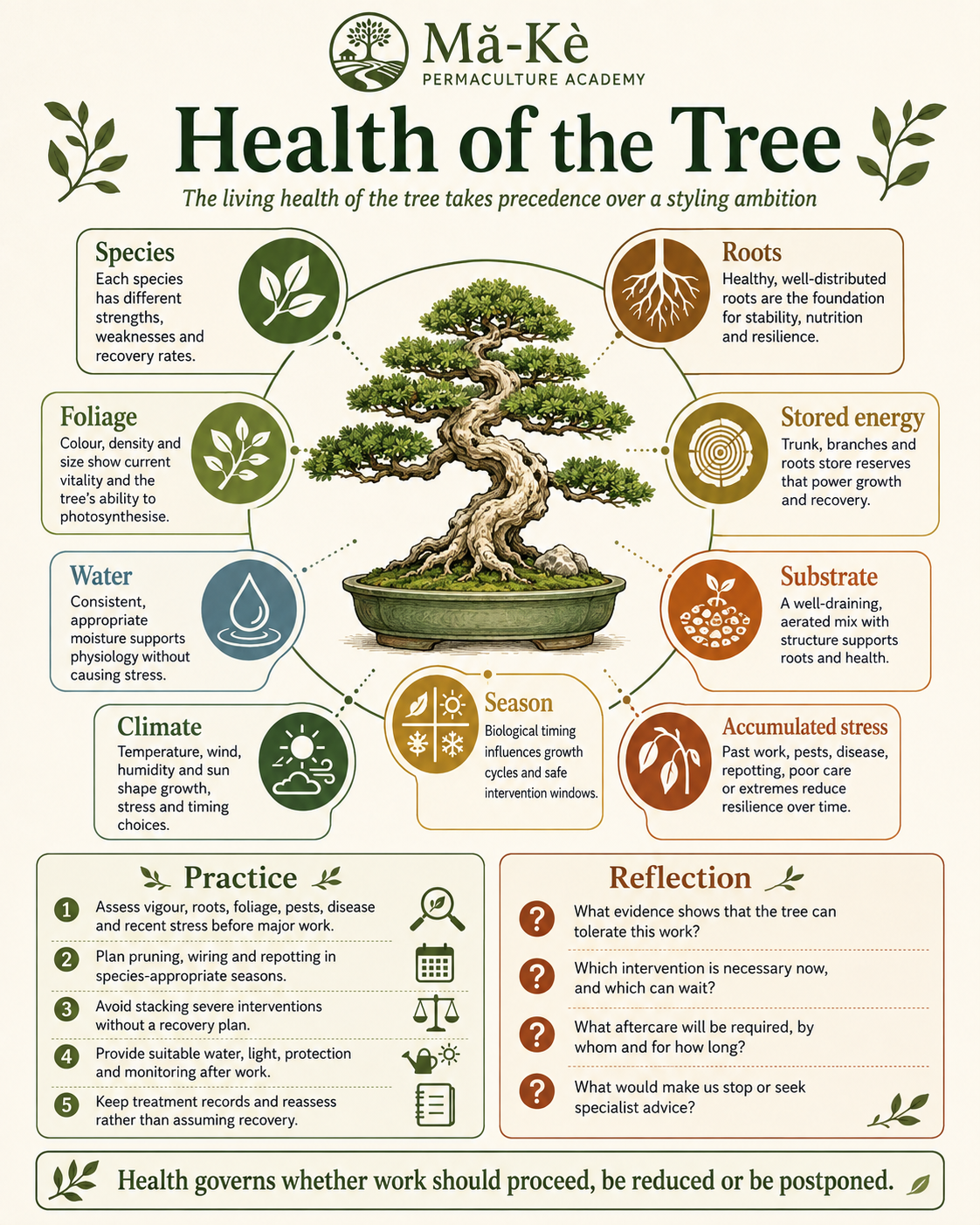
A bonsai is not a sculpture made from dead material. Its capacity to recover depends on species, roots, foliage, stored energy, water, substrate, climate, season and accumulated stress. Health of the Tree therefore governs whether work should proceed, be reduced or be postponed.
How it works in practice
- Assess vigour, roots, foliage, pests, disease and recent stress before major work.
- Plan pruning, wiring and repotting in species-appropriate seasons.
- Avoid stacking severe interventions without a defensible recovery plan.
- Provide suitable water, light, protection and monitoring after work.
- Keep treatment records and reassess rather than assuming recovery.
Questions for reflection
- What evidence shows that the tree can tolerate this work?
- Which intervention is necessary now, and which can wait?
- What aftercare will be required, by whom and for how long?
- What would make us stop or seek specialist advice?
Relationship with permaculture ethics and principles
Mark relates this tenet to Earth Care and People Care because skilled care includes both the tree’s living needs and the practitioner’s responsibility. That mapping is part of his developing synthesis, not a claim that permaculture established bonsai treatment rules.
Evidence and development
The tenet appears in Design 01 and its appendix. The RHS describes bonsai care as species-specific and covers watering, pruning and repotting. The public sources support general horticultural caution; they do not substitute for diagnosis of an individual tree.
Limitations and cautions
Visual appearance alone cannot diagnose health. Advice suitable for one species, climate or stage may be damaging in another. Suspected disease, serious decline or valuable specimens warrant qualified, context-specific help.
Sources and context
- Design 01, printed pages 15 to 16, PDF pages 19 to 20; appendix, PDF page 1.
- Royal Horticultural Society, bonsai cultivation guidance.