Mă-Kè Bonsai Way tenet
Styling with Intent
Styling becomes responsible when each intervention has a clear purpose, respects the living tree and remains open to revision.
What this tenet means
Intent is more than a preferred silhouette. It includes the story or feeling being explored, the horticultural conditions, the likely development over time and the responsibilities created by the work. In Mark’s practice, a design direction begins a conversation with the tree rather than imposing a finished picture.
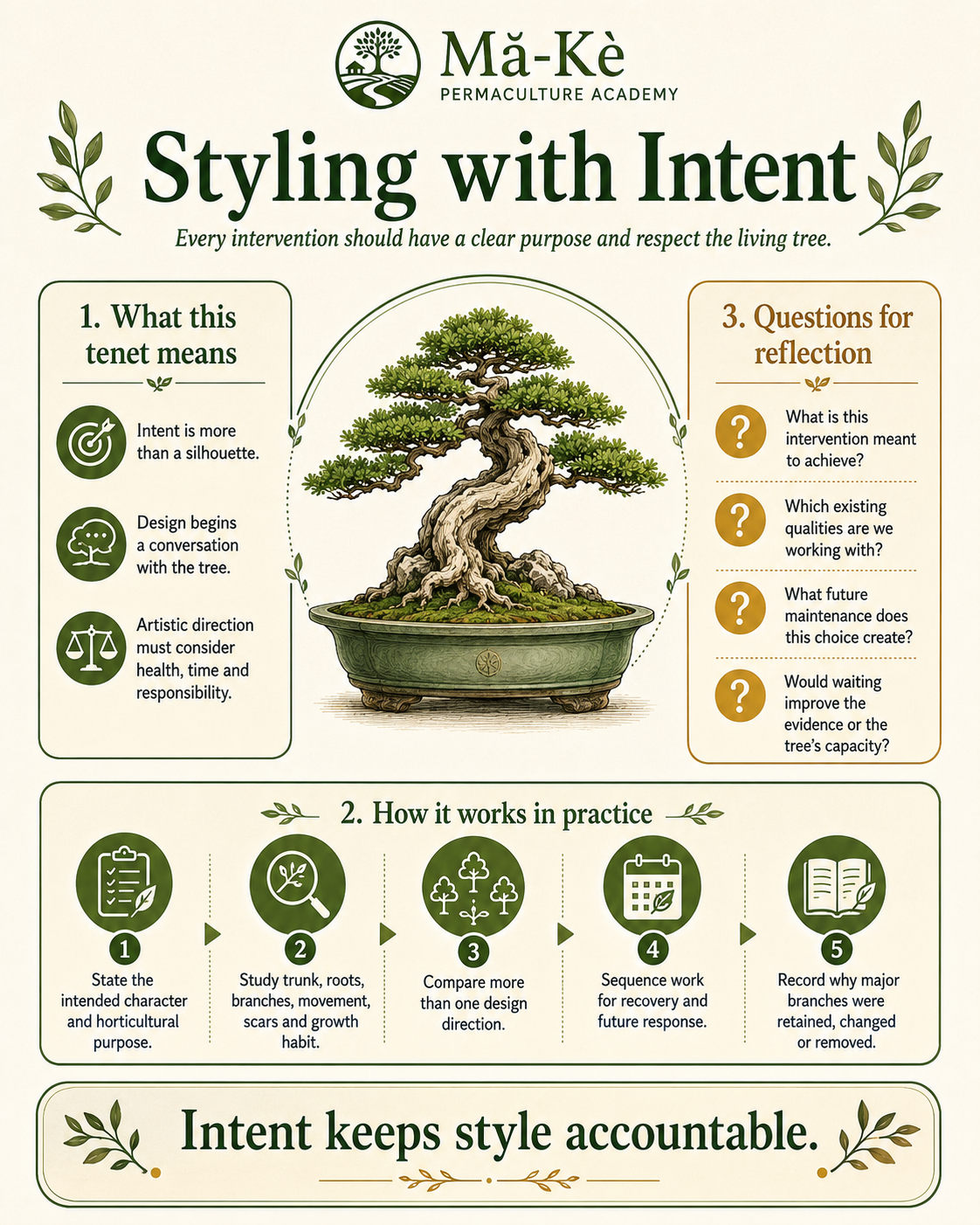
How it works in practice
- State the intended character and horticultural purpose before cutting or bending.
- Study the trunk, roots, branches, movement, scars and growth habit.
- Compare more than one design direction.
- Sequence work so the tree can recover and the design can respond to new growth.
- Record why significant branches were retained, changed or removed.
Questions for reflection
- What is this intervention meant to achieve?
- Which existing qualities are we working with?
- What future maintenance does this choice create?
- Would waiting improve the evidence or the tree’s capacity?
Relationship with permaculture ethics and principles
The tenet connects in Mark’s synthesis with observation, small and slow solutions and responsibility for consequences. These links are interpretations within The Mă-Kè Bonsai Way, not universal rules of permaculture or bonsai.
Evidence and development
Design 02 develops a bonsai course in three modules and uses pattern-based curriculum decisions. Design 01 records the tenet and the integration of Mă-Kè with permaculture. Together they support Mark’s authored teaching practice, not a claim that every design choice is independently validated.
Limitations and cautions
Artistic intent can rationalise unnecessary harm if health evidence is ignored. Different bonsai traditions and practitioners may value different forms. This page invites accountable choice rather than prescribing one aesthetic.
Sources and context
- Design 01, printed pages 12 to 16, PDF pages 16 to 20; appendix, PDF page 1.
- Design 02, PDF page 8 and printed pages 9 to 12, PDF pages 14 to 17: course structure and pattern-based curriculum.
- SMARTER Goals for Permaculture Design.