Mă-Kè Bonsai Way tenet
Mindfulness and Patience
Attentive routines and willingness to wait can improve observation and restraint in bonsai practice.
What this tenet means
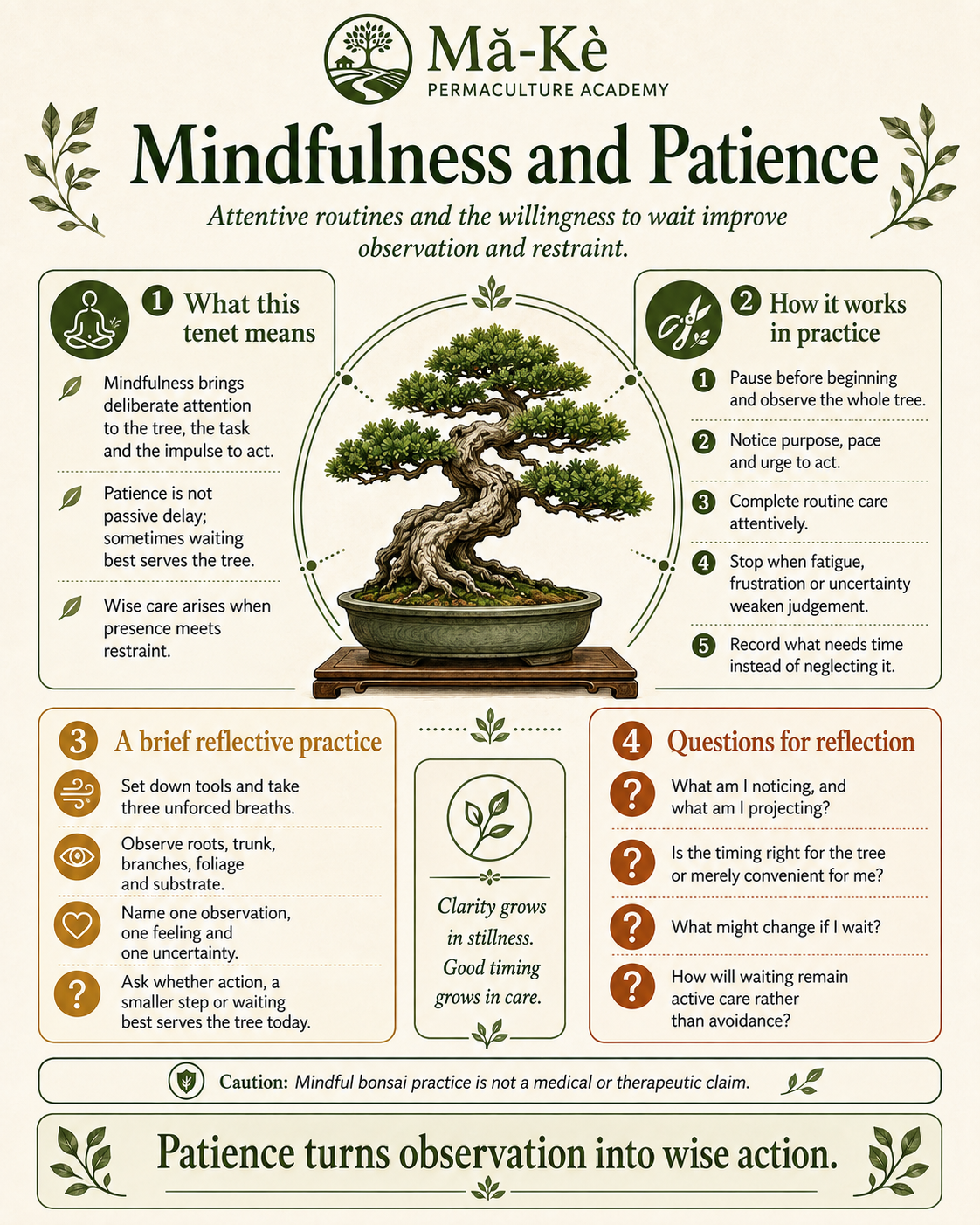
In Mark’s practice, mindfulness means bringing deliberate attention to the tree, the task and his own impulse to act. Patience is not passive delay. It is the capacity to wait for the right season, further evidence, recovery or new growth when immediate action would serve the practitioner more than the tree.
How it works in practice
- Pause before beginning and observe the whole tree.
- Notice the purpose, bodily pace and urge to act.
- Complete routine care attentively rather than mechanically.
- Stop when fatigue, frustration or uncertainty undermines judgement.
- Record what needs time instead of turning delay into neglect.
A brief reflective practice
- Set down tools and take three unforced breaths.
- Observe roots, trunk, branches, foliage and substrate without choosing an intervention.
- Name one direct observation, one feeling and one uncertainty.
- Ask whether action, a smaller step or waiting best serves the tree today.
Questions for reflection
- What am I noticing, and what am I projecting?
- Is the timing right for the tree or merely convenient for me?
- What might change if I wait?
- How will waiting remain active care rather than avoidance?
Relationship with permaculture ethics and principles
Mark’s tenet draws on his own bonsai practice and is informed by wider contemplative traditions, including Zen, as well as permaculture attention to observation and slow solutions. It is not presented as ancient Japanese doctrine or as a clinical intervention.
Evidence and development
Design 01 and its appendix record Mindfulness and Patience as one of the six tenets. Sōtō Zen sources provide context for attentive practice, while health evidence about mindfulness is mixed and context-dependent. The Academy therefore makes no medical, psychological or therapeutic claim.
Limitations and cautions
Bonsai activity is not a substitute for health care. Mindfulness practices can be unhelpful or distressing for some people. Choose a comfortable, brief approach, stop if it causes difficulty and seek appropriate support where needed.
Sources and context
- Design 01, printed pages 15 to 16, PDF pages 19 to 20; appendix, PDF page 1.
- Sōtō Zen, “The Practice of Zen”.
- US National Center for Complementary and Integrative Health, mindfulness evidence and safety overview.