Ecological care · Practice 5 of 18
Natural Pest Control
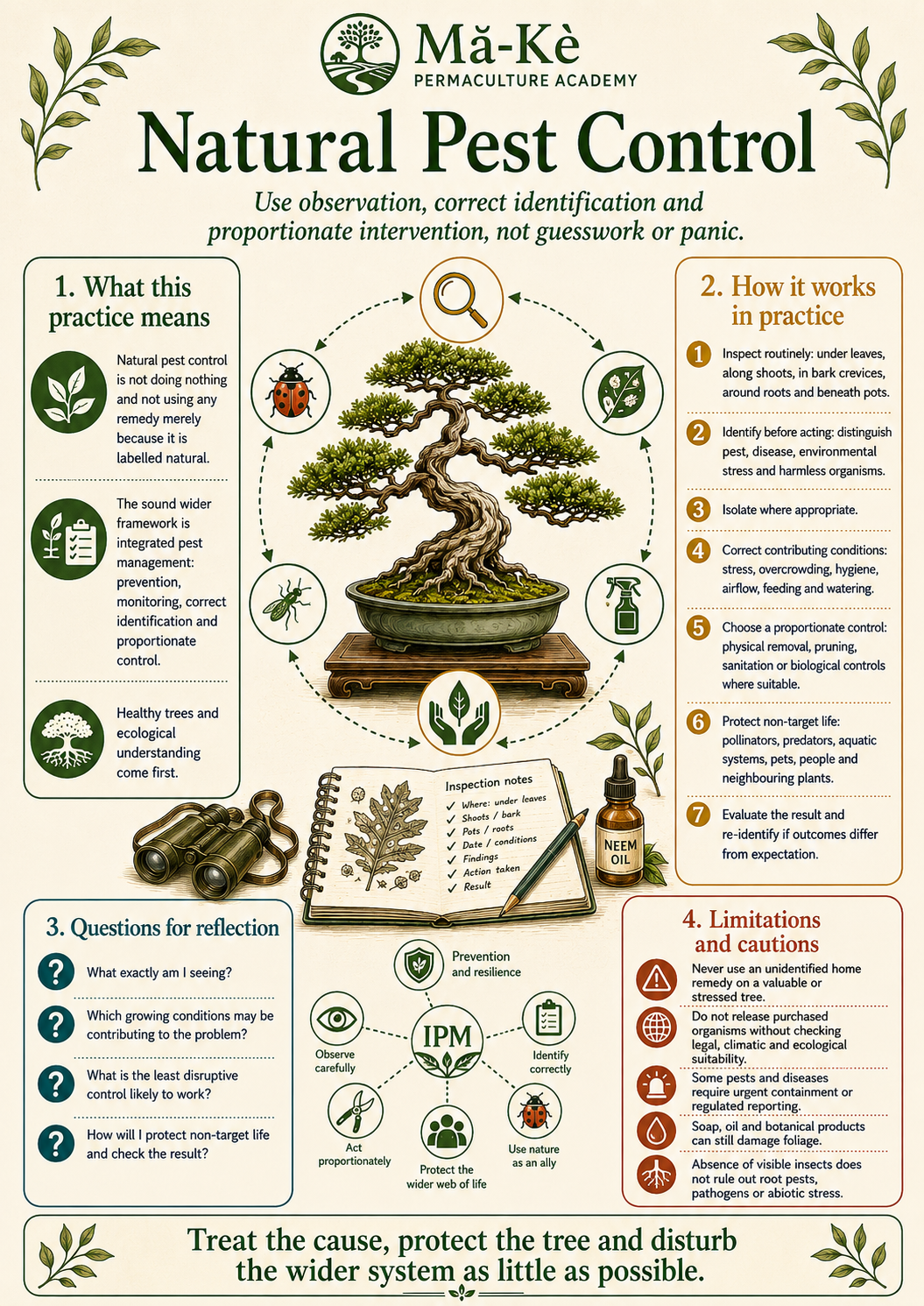
Natural Pest Control is not a promise to do nothing or to use any remedy labelled natural. It is a disciplined approach based on healthy plants, accurate identification, observation, ecological understanding and proportionate intervention.
Why this matters
Bonsai can be vulnerable because stress, confined roots and close grouping may increase susceptibility or allow pests to move between trees. At the same time, indiscriminate treatment can harm non-target organisms, mask a management problem or expose people and animals to avoidable risk.
The most defensible wider framework is integrated pest management (IPM). IPM begins with prevention and monitoring, uses correct identification and thresholds, and selects controls that achieve the necessary result with the least avoidable disruption. In Mă-Kè practice, this supports Earth Care while keeping the health of the tree central.
The practice
- Inspect routinely. Look under leaves, along shoots, in bark crevices, around roots and beneath pots. Record changes rather than waiting for severe damage.
- Identify before acting. Distinguish pest, disease, environmental stress and harmless organisms. Seek competent advice when uncertain.
- Isolate where appropriate. Reduce spread while maintaining suitable light, water and ventilation.
- Correct contributing conditions. Review plant stress, overcrowding, hygiene, airflow, feeding and watering.
- Choose a proportionate control. Physical removal, pruning of affected material, sanitation or biological controls may be appropriate in some cases. Follow local guidance and product labels.
- Protect non-target life. Consider pollinators, predators, aquatic systems, pets, people and neighbouring plants.
- Evaluate. Confirm whether the population and damage decline. Re-identify if the response differs from expectation.
From Mark's Diploma
The Mă-Kè appendix advocates managing pests without routine chemical pesticide use, including support for beneficial insects and companion planting. Design 01 connects natural pest control with ecological balance and diversity.
Beneficial organisms can support IPM, but a plant association should not be described as effective pest control without evidence for the species, pest and context. Severe infestations may require targeted products or professional advice. 'Natural' substances can also be toxic or harmful.
Limitations and cautions
- Never use an unidentified home remedy on a valuable or stressed tree.
- Do not release purchased organisms without checking legal, climatic and ecological suitability.
- Some pests and diseases require urgent containment or regulated reporting.
- Soap, oil and botanical products can damage foliage if concentration, temperature or species sensitivity is ignored.
- Absence of visible insects does not rule out root pests, pathogens or abiotic stress.
Questions for practice
- What organism or condition am I actually dealing with?
- What evidence connects it to the observed damage?
- Which intervention is effective and least disruptive?
- How will I protect non-target organisms and check the result?
Connections
Read with Creating a Bonsai Ecosystem, Health of the Tree, Seasonal Awareness, Eco-friendly Practices and Apply Self-Regulation and Accept Feedback in the principles material.
Diploma connections
- MKE-APP, PDF p. 2, practice 8.
- MKE-D01, printed pp. 17-19, PDF pp. 21-23.
- MKE-D01, printed p. 32, PDF p. 36, later holistic synthesis.
References and further reading
- Food and Agriculture Organization of the United Nations. 'Integrated Pest Management'.
- Food and Agriculture Organization of the United Nations. 'Principles and practices'.
- University of California Statewide IPM Program. 'Natural Enemies Gallery'.
- D'Cruz, Mark. The Mă-Kè Bonsai Way Appendix and Design 01.